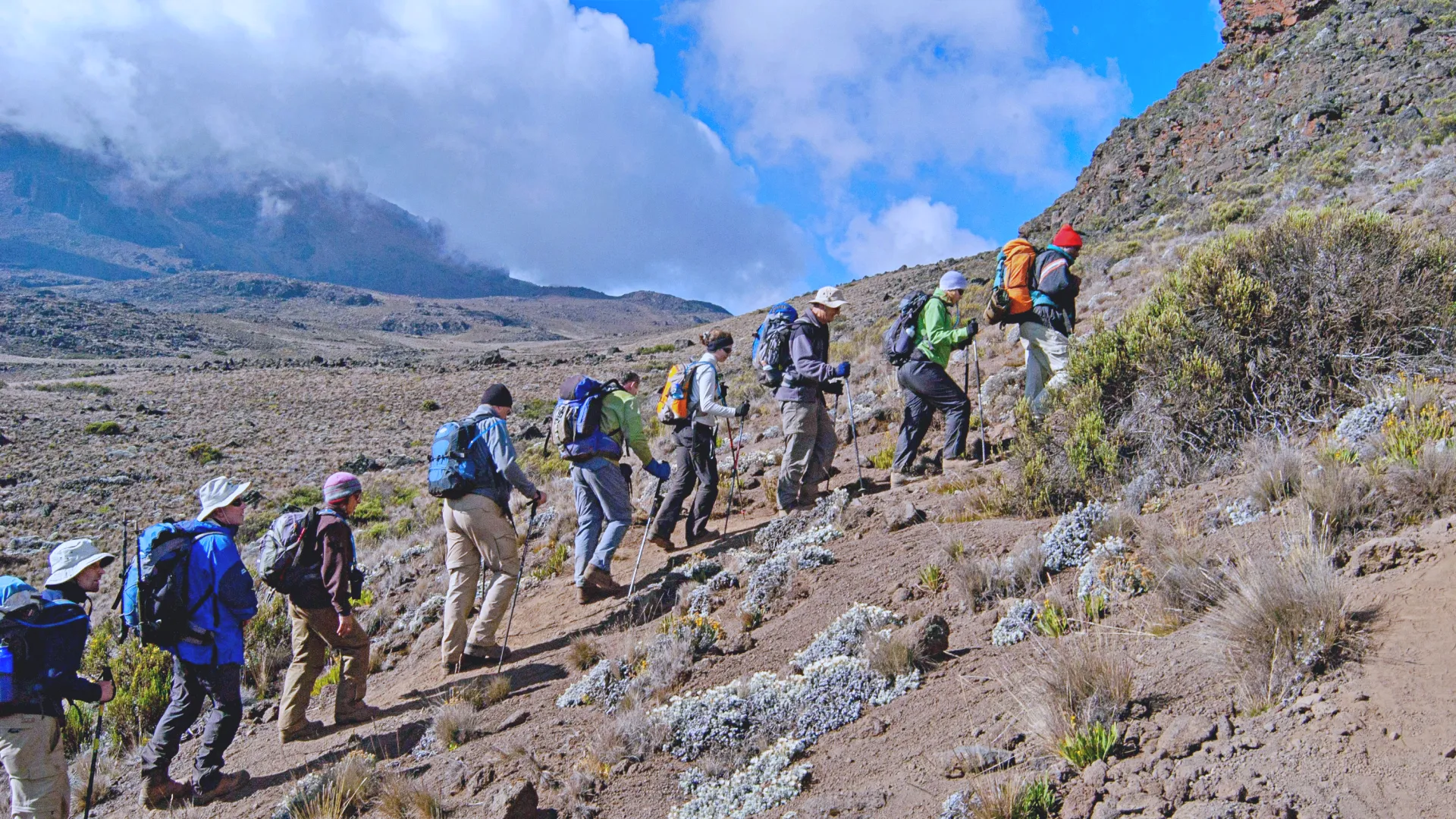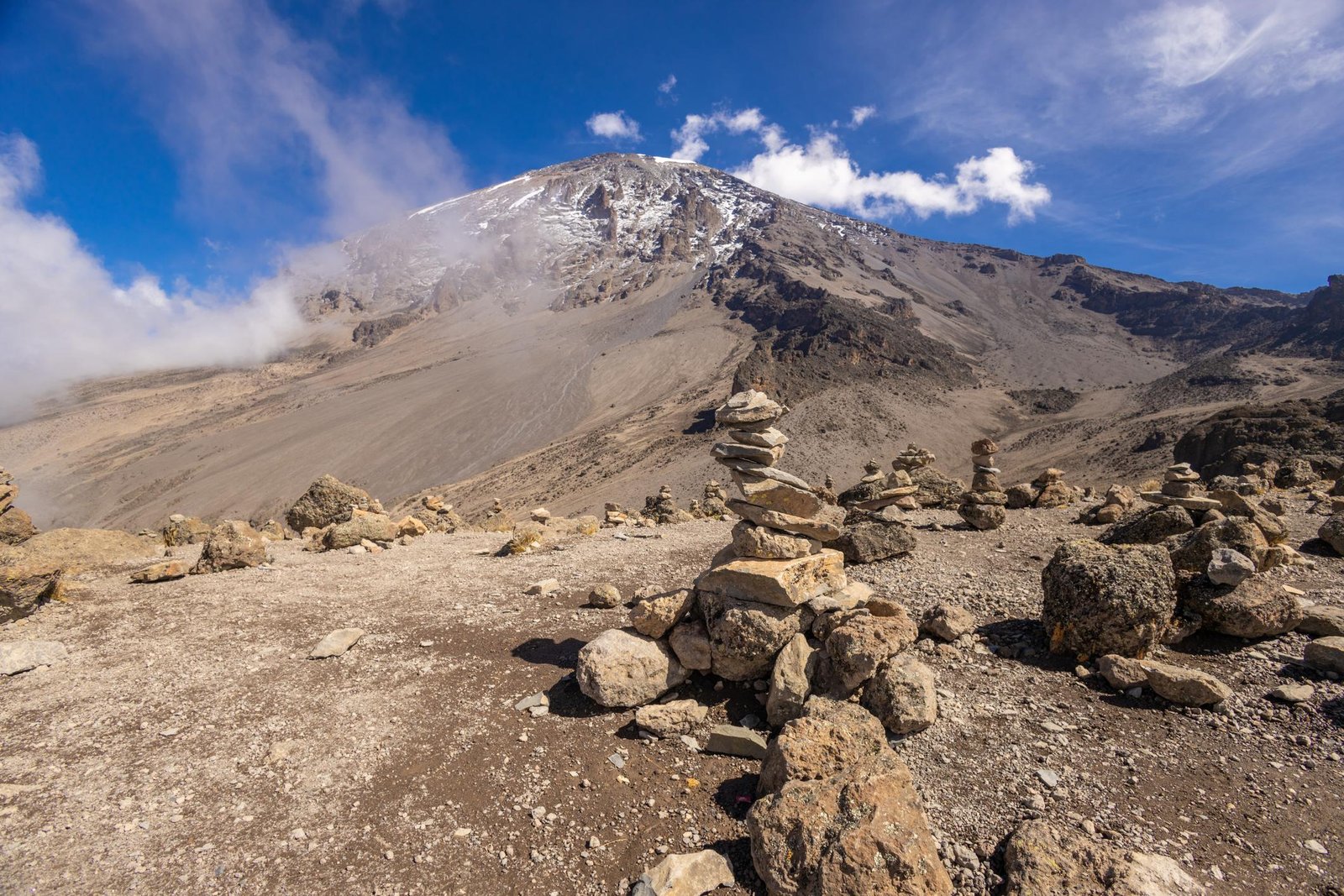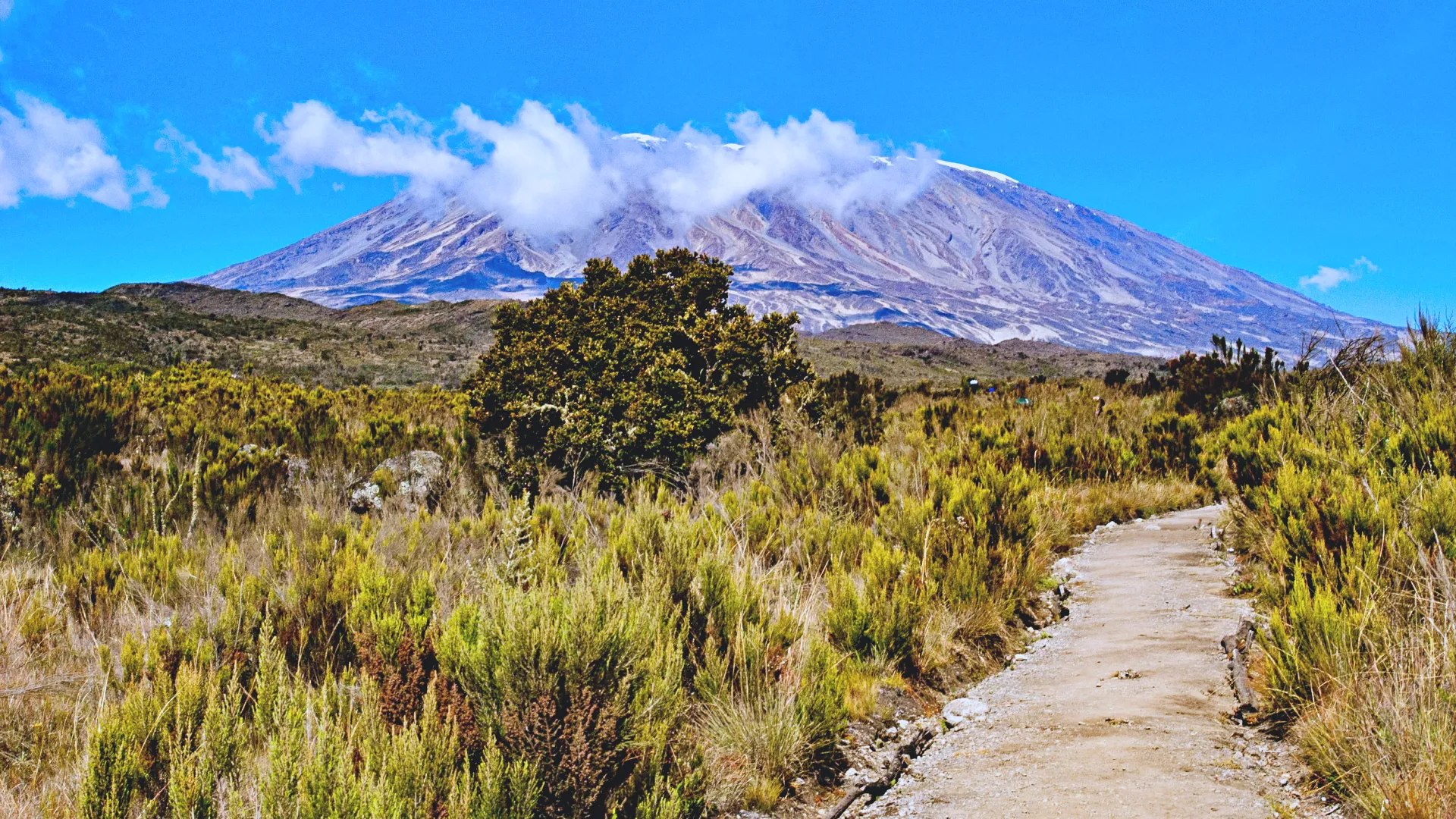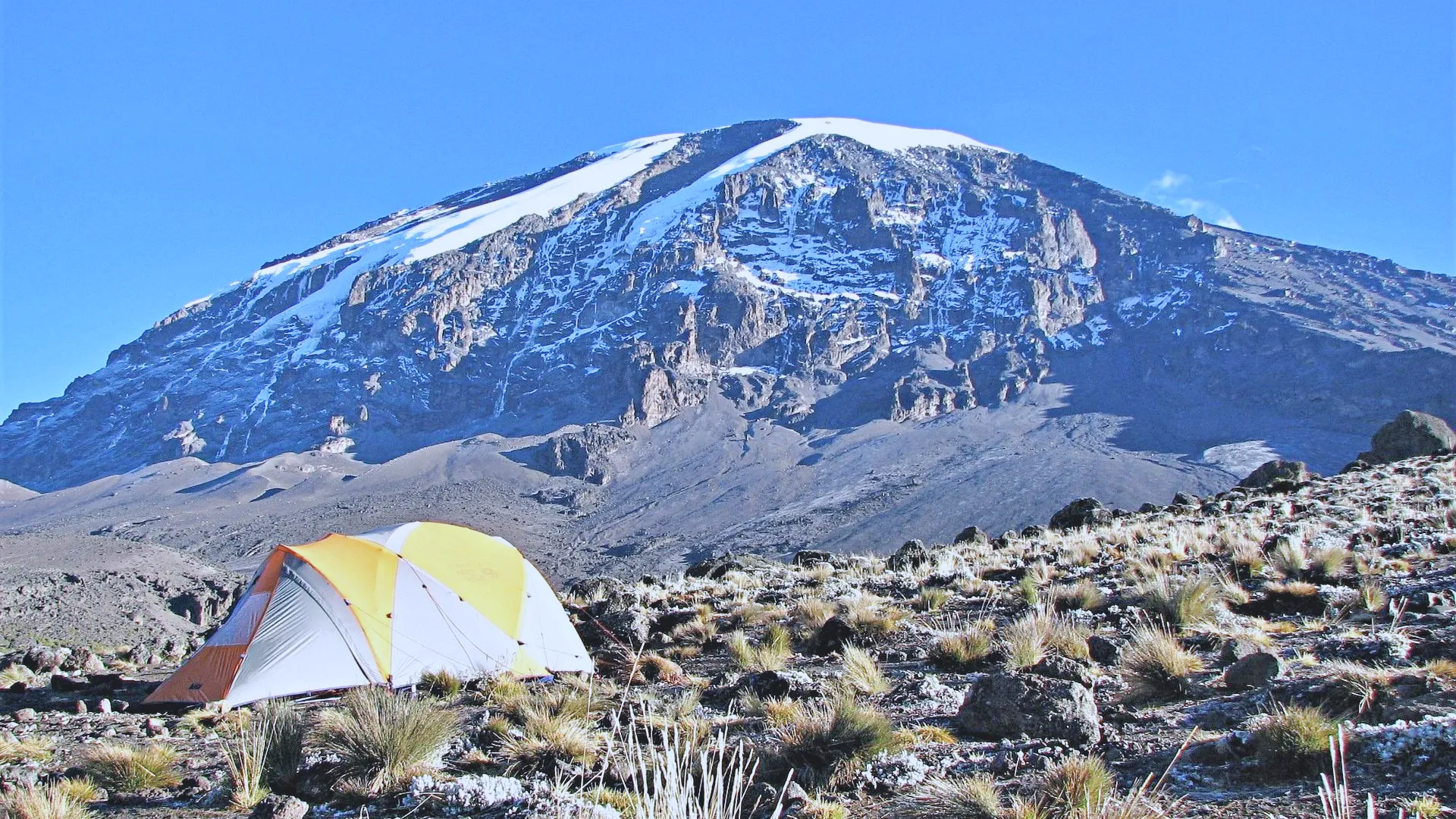
A slow and scenic ascent across Kilimanjaro’s quiet western flank.
View full itinerary ↓
A complete checklist refined from real expeditions, covering clothing, equipment, and high-altitude essentials.
Home » Kilimanjaro routes » Marangu Route
The Marangu Route follows Kilimanjaro’s historic eastern approach, beginning in lush rainforest where wide paths and gentle gradients create a steady, familiar rhythm. Wooden mountain huts appear along the trail, offering a sense of tradition and shelter that has defined this route for decades.
As the climb rises into open moorland, views of Mawenzi Peak dominate the horizon, adding dramatic contrast to the otherwise gradual ascent. Evenings in the communal huts bring a shared atmosphere, where climbers gather out of the cold and exchange stories of the day’s progress. The journey feels structured and continuous, guided by a clear path toward the summit.
Without extended acclimatization days, the mountain’s altitude becomes more noticeable as the route approaches Kibo. The midnight ascent demands determination, and the long climb to the crater rim tests both endurance and resolve. Yet the sunrise over Africa from Uhuru Peak carries a timeless simplicity that reflects the classic nature of the Marangu experience.
For many, Marangu is remembered as the traditional Kilimanjaro climb — straightforward, communal, and rooted in history — a journey that connects present-day trekkers with generations who have followed the same path toward the roof of Africa.
Each route differs in acclimatization, scenery, difficulty, and summit success. This quick guide highlights the essential contrasts to help you choose the right path before exploring detailed itineraries.
The trek begins at Marangu Gate, where park formalities are completed before entering lush rainforest alive with birdsong and monkey calls. The trail ascends gradually along a well-maintained path beneath towering trees draped in moss.
After several hours, you reach Mandara Hut, a cluster of wooden A-frame huts nestled within the forest. A short optional walk to Maundi Crater reveals the first distant views toward the Kenyan plains and northern slopes of Kilimanjaro.
Leaving the rainforest behind, the trail climbs steadily into open moorland where vegetation becomes sparse and the first clear views of Mawenzi Peak appear. Giant lobelias and groundsels dominate the landscape, signaling the transition to higher altitude.
Arrival at Horombo Hut provides expansive views and a comfortable resting point above the cloud line.
A dedicated acclimatization day greatly improves summit success. Short hikes toward Zebra Rocks expose the body to higher altitude before returning to Horombo for rest and recovery.
This extra day is the key difference that makes the 6-day Marangu far safer than the 5-day schedule.
The trail crosses the broad saddle between Mawenzi and Kibo, a stark alpine desert with sweeping volcanic scenery. Vegetation disappears completely as altitude increases.
Arrival at Kibo Hut marks the final staging point before the summit attempt. After rest and an early meal, climbers prepare for the midnight ascent.
The summit push begins around midnight, climbing steep scree toward Gilman’s Point on the crater rim at sunrise before continuing to Uhuru Peak, the highest point in Africa.
After celebrating at the summit, the long descent returns to Horombo Hut for overnight recovery.
The final descent passes through moorland and lush rainforest back to Marangu Gate, where climbers receive summit certificates and conclude their Kilimanjaro adventure before transfer to the hotel.
The trek begins at Marangu Gate, where park registration is completed before entering lush rainforest alive with birds and monkeys. The trail climbs gradually beneath tall trees draped in moss, providing a gentle introduction to Kilimanjaro trekking.
After several hours, climbers reach Mandara Hut, a cluster of wooden A-frame huts nestled within the forest. An optional walk to Maundi Crater offers early views across the plains toward Kenya.
Leaving the rainforest behind, the route climbs steadily into open moorland, where vegetation thins and the dramatic silhouette of Mawenzi Peak becomes visible. Giant lobelias and groundsels dominate the landscape, marking the transition to high altitude.
Arrival at Horombo Hut provides expansive views and a comfortable resting point above the cloud line.
The trail crosses the broad saddle between Mawenzi and Kibo, a stark alpine desert with sweeping volcanic scenery and no vegetation. The steady climb leads to Kibo Hut, the final base before the summit attempt.
After rest and an early evening meal, climbers prepare for the midnight ascent toward Uhuru Peak.
The summit push begins around midnight, climbing steep scree toward Gilman’s Point on the crater rim at sunrise before continuing to Uhuru Peak (5,895 m), the highest point in Africa.
After celebrating at the summit, climbers descend back through the alpine desert to Horombo Hut for overnight recovery.
The final descent leads through moorland and lush rainforest back to Marangu Gate, where climbers receive summit certificates and conclude their Kilimanjaro journey before transfer to the hotel.
Mount Kilimanjaro climbing is a carefully supported expedition that requires experienced guides, professional mountain crews, quality camping equipment, and strict safety protocols. The prices represent the total cost per person based on group size, allowing us to distribute the cost of guides, porters, park fees, transport, and expedition equipment across the team.
As the group size increases, the price per climber decreases because essential logistics such as mountain crew support, some safety equipment, and vehicle transfers are shared among participants.
| Pax | 1 | 2 | 3 | 4 | 5 | 6 | 7 | 8 | 9 | 10+ |
|---|---|---|---|---|---|---|---|---|---|---|
| 5-Day Marangu | $1,860 | $1,512 | $1,415 | $1,368 | $1,363 | $1,340 | $1,324 | $1,313 | $1,304 | $1,296 |
| 6-Day Marangu | $2,153 | $1,771 | $1,663 | $1,610 | $1,607 | $1,580 | $1,561 | $1,548 | $1,538 | $1,529 |
(No hidden authority costs later)
Tips are customary and expected on Kilimanjaro and go directly to the crew.
Recommended total tip guideline (per group per day):
(Exact tipping chart provided after booking confirmed)
Climbing Kilimanjaro is a high-altitude expedition, not a simple hike. Every ascent is supported by experienced mountain crews, careful acclimatization pacing, and continuous health monitoring designed to protect both safety and summit success.
Certified local guides lead every climb, combining technical mountain knowledge with years of high-altitude experience on Kilimanjaro’s changing terrain and weather.
Oxygen saturation, heart rate, and overall condition are checked throughout the trek to identify altitude stress early and respond calmly and safely.
Crews carry emergency oxygen, first-aid equipment, and maintain clear evacuation procedures to ensure rapid response if conditions require descent.
Fair porter treatment, proper equipment, and responsible mountain practices protect both the team and the environment throughout the expedition.