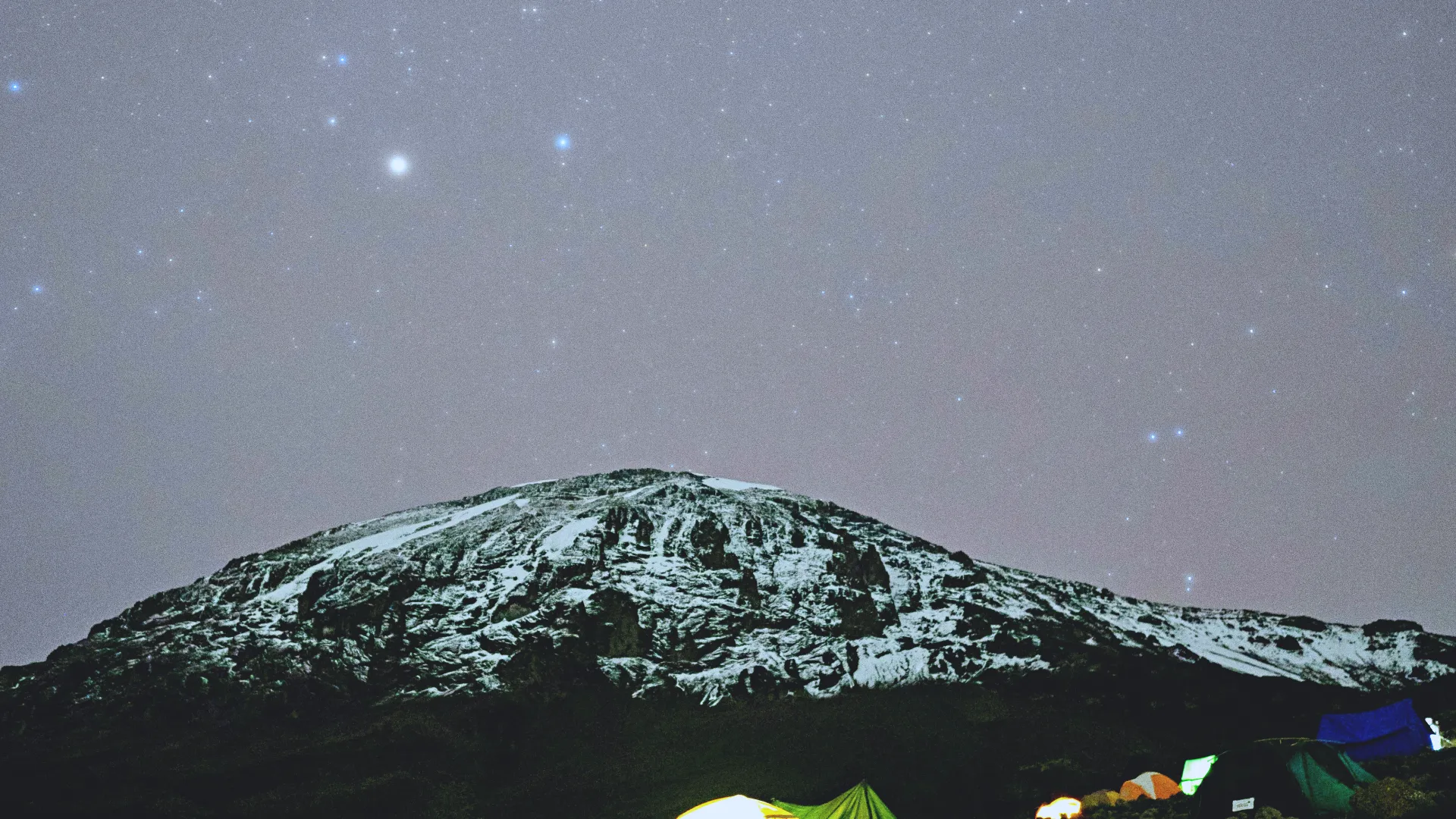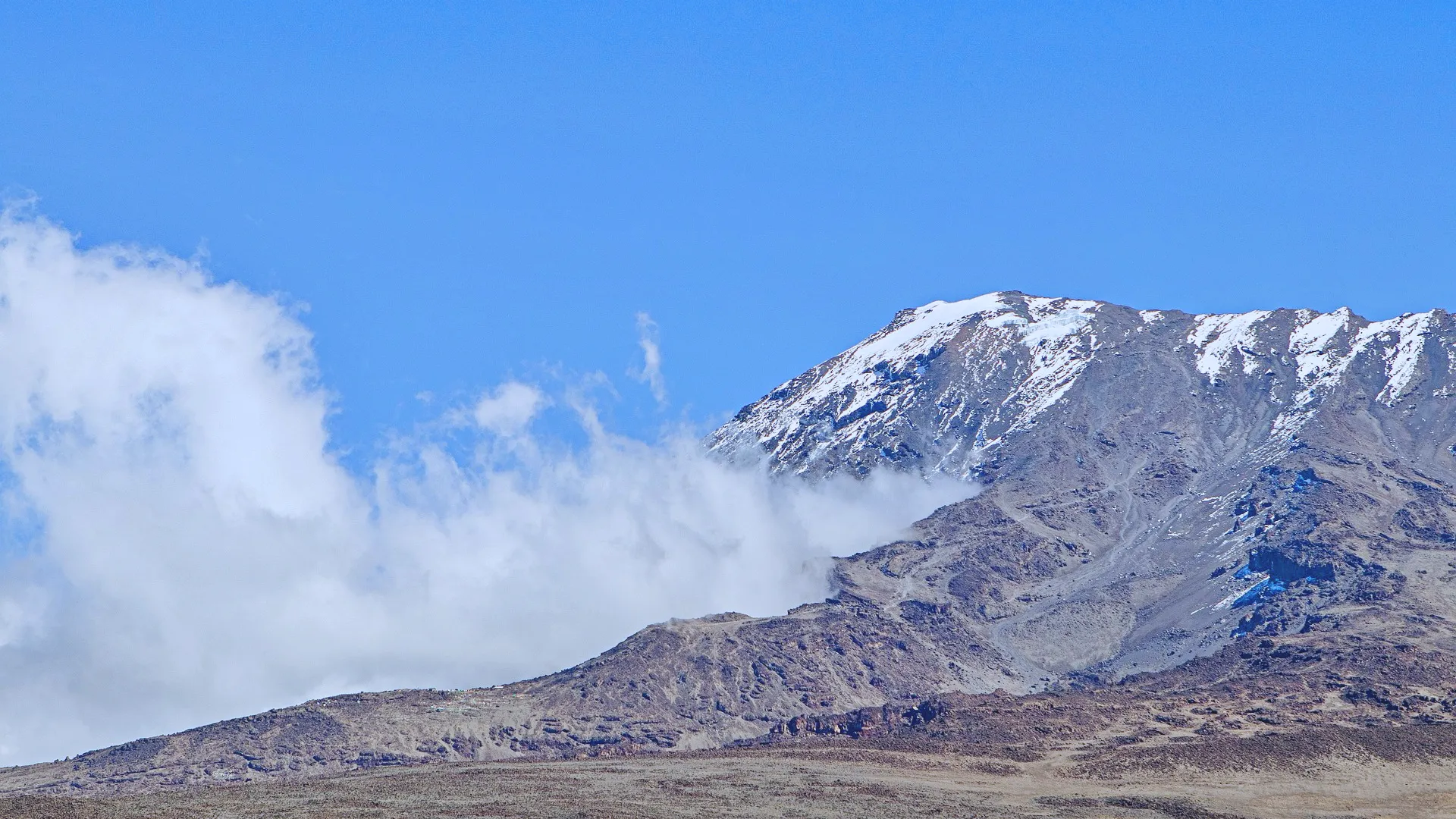
A slow and scenic ascent across Kilimanjaro’s quiet western flank.
View full itinerary ↓
A complete checklist refined from real expeditions, covering clothing, equipment, and high-altitude essentials.
Home » Kilimanjaro routes » Northern Circuit
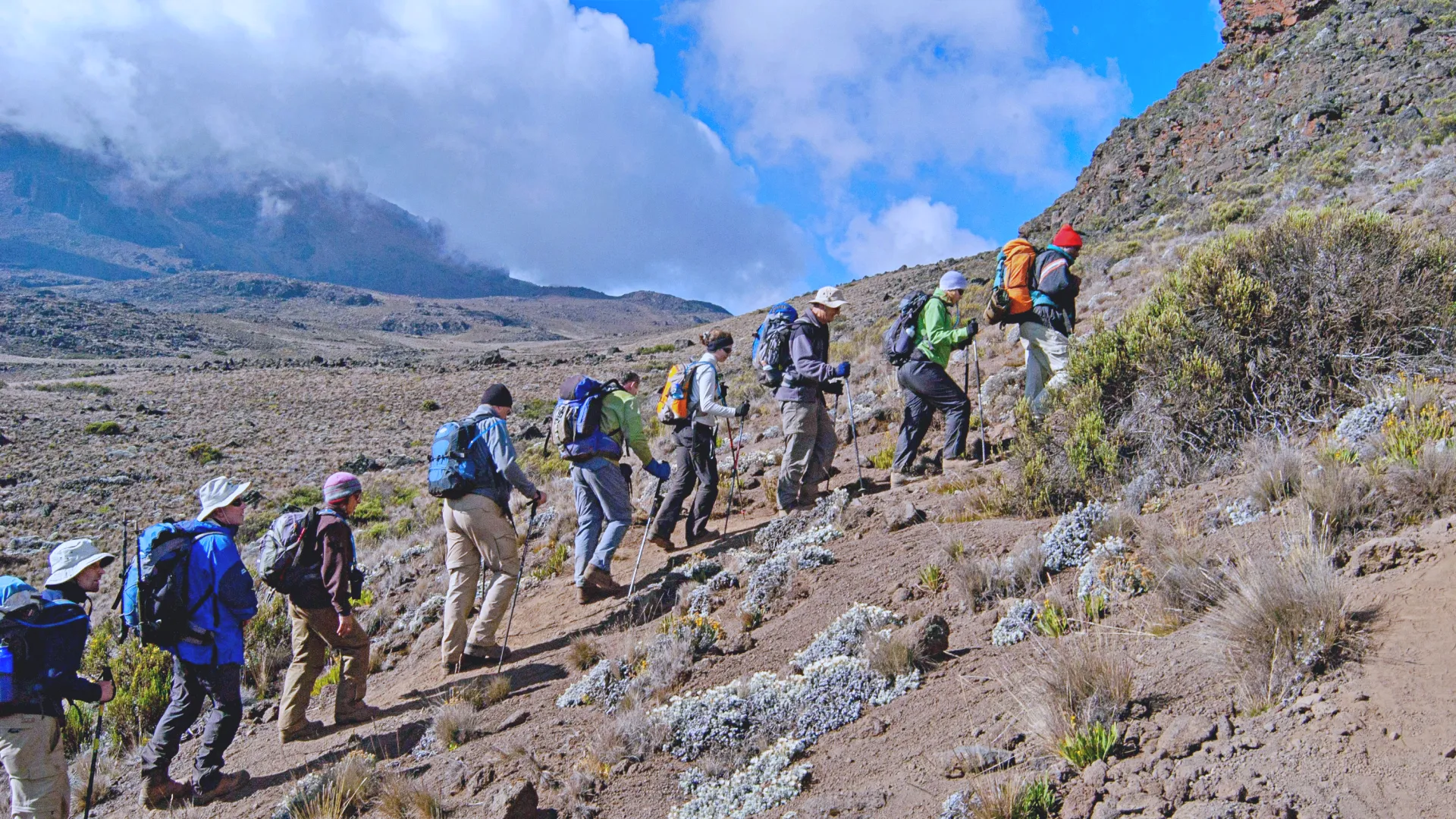
The Northern Circuit begins on Kilimanjaro’s western slopes and unfolds slowly across some of the mountain’s most remote terrain. From rainforest to the broad Shira Plateau, the early days establish a deliberate rhythm designed for deep acclimatization and quiet immersion in the landscape.
What sets this route apart is its long traverse across the rarely visited northern side of the mountain. Here, vast high-altitude deserts stretch toward the horizon, and the sense of isolation becomes profound. With fewer climbers and expansive views into Kenya’s plains, the journey feels more like a true expedition than a typical trek.
The extended schedule allows the body to adapt fully before the summit attempt, and climbers often reach the final ascent feeling unusually strong and prepared. The night climb to Uhuru Peak is still demanding, but it carries a calm confidence built over many days of gradual progress. Sunrise at the summit feels expansive rather than sudden — the natural high point of a long, patient journey.
More than any other route, the Northern Circuit is remembered for its completeness. It offers not just a summit, but a full circumnavigation of Kilimanjaro’s changing worlds — forest, plateau, desert, and ice — leaving climbers with a deep and lasting sense of having truly traveled the mountain.
Each route differs in acclimatization, scenery, difficulty, and summit success. This quick guide highlights the essential contrasts to help you choose the right path before exploring detailed itineraries.
The trek begins at Lemosho Gate on Kilimanjaro’s western flank, entering lush rainforest filled with birdlife and colobus monkeys. A gentle climb leads to Mti Mkubwa Camp, offering a quiet first night on the mountain.
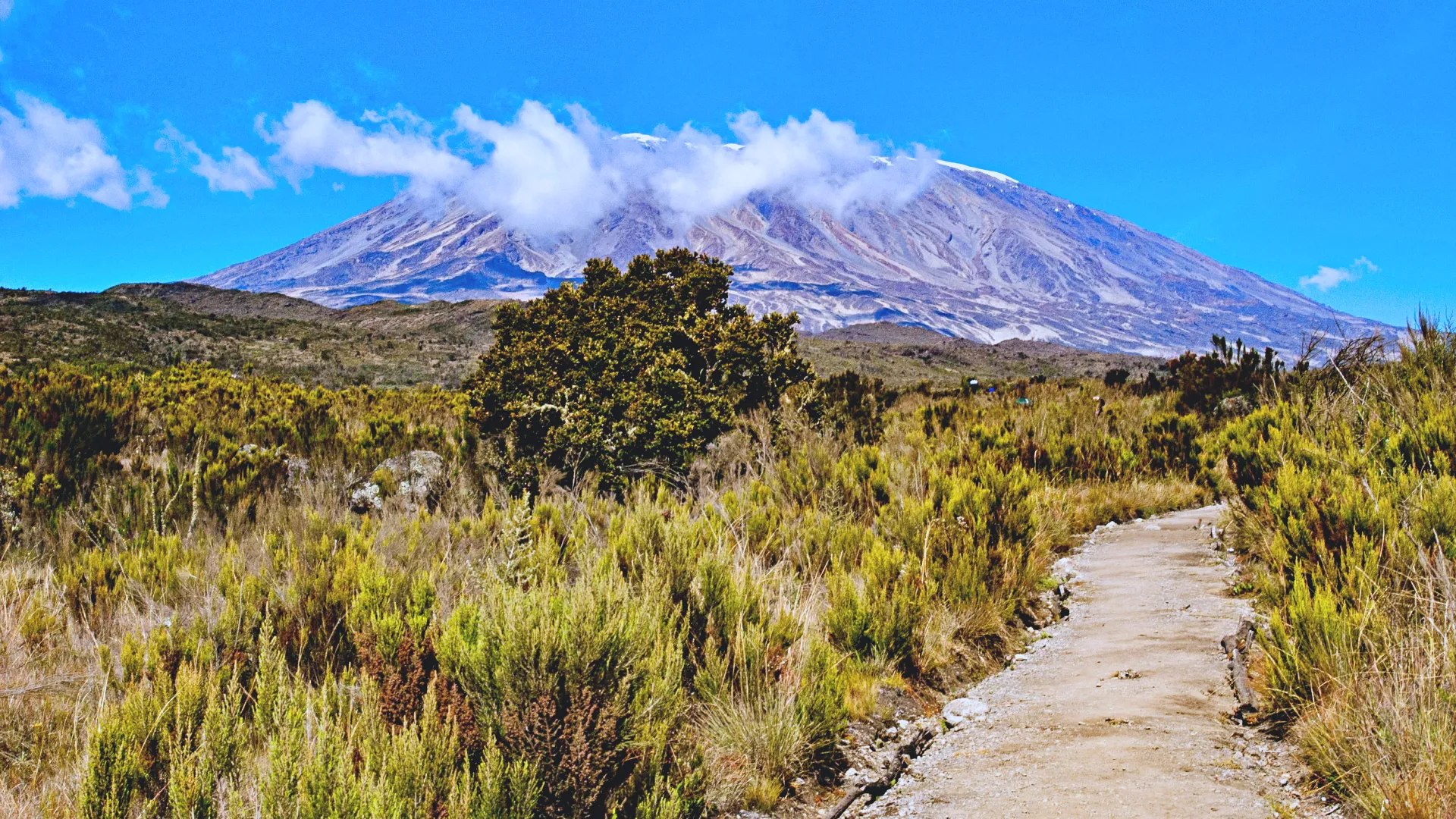
Morning light filters through thinning trees as the trail climbs steadily upward. The dense rainforest loosens its grip, giving way to heather-covered slopes and wide volcanic horizons.
For the first time, the sky feels immense. Behind you, cloud oceans gather over the plains; ahead, the silent bulk of Kibo begins to reveal itself.
At Shira I Camp, the expedition’s perspective shifts. The forest is gone. Wind replaces birdsong. The mountain has begun to show its scale.
This is a day of deliberate patience. The trail crosses the vast Shira Plateau, one of the oldest volcanic landscapes on the mountain, where distance feels distorted and silence stretches in every direction.
Walking slowly here is not weakness but wisdom. Each unhurried step allows the body to begin its quiet negotiation with altitude.
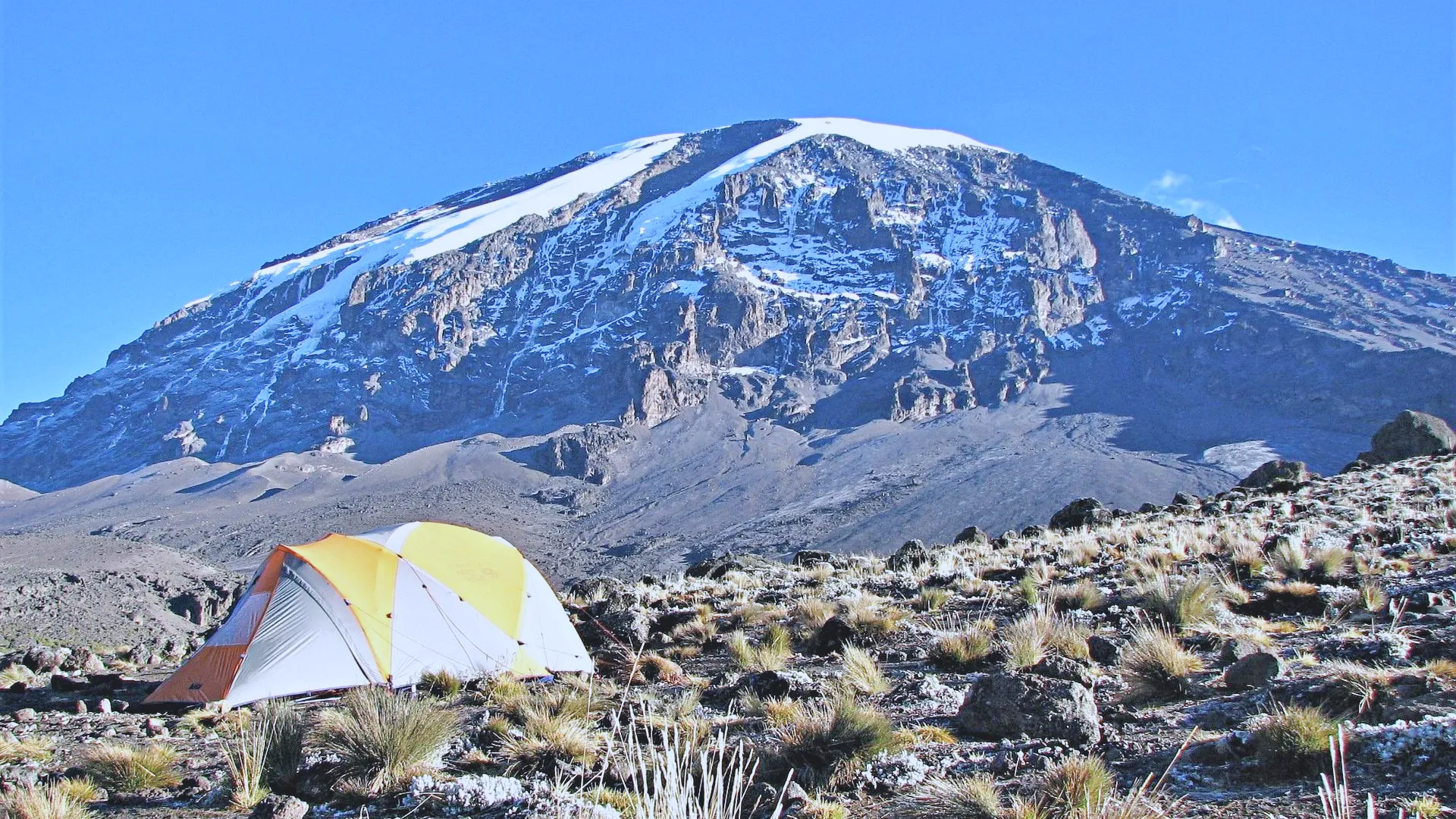
At Shira II Camp, sunset often burns across Kibo’s glaciers in deep gold and violet — the first true promise of the summit far above.
The air thins noticeably as the route climbs toward the dark volcanic sentinel of Lava Tower. Breathing deepens. Conversation fades. The mountain begins to test resolve.
Time spent high is brief but purposeful — the body learning, cell by cell, how to survive with less oxygen.
Then the trail turns northward, descending into the remote quiet of Moir Camp, far from the traffic of southern routes.
Here, Kilimanjaro feels vast, empty, and profoundly still — a wilderness few climbers ever see.
The Northern Circuit reveals itself fully today. The path curves across lonely alpine ridges where wind moves freely and the plains of Kenya shimmer far below.
There are moments here when no other trekkers are visible — only sky, stone, and distance.
This isolation is the true luxury of the Northern Circuit: space to feel the mountain without interruption.
Buffalo Camp rests on an exposed ridge, where sunset arrives in long, slow silence.
The terrain softens into rolling high-altitude desert. Though physically easier, the altitude makes every movement deliberate.
By now, the expedition rhythm is fully formed — wake, walk, breathe, drink, rest.
Simple acts, repeated with discipline, carrying the team closer to the summit.
At Third Cave Camp, anticipation grows quietly.
Tomorrow, the route turns toward Kibo.
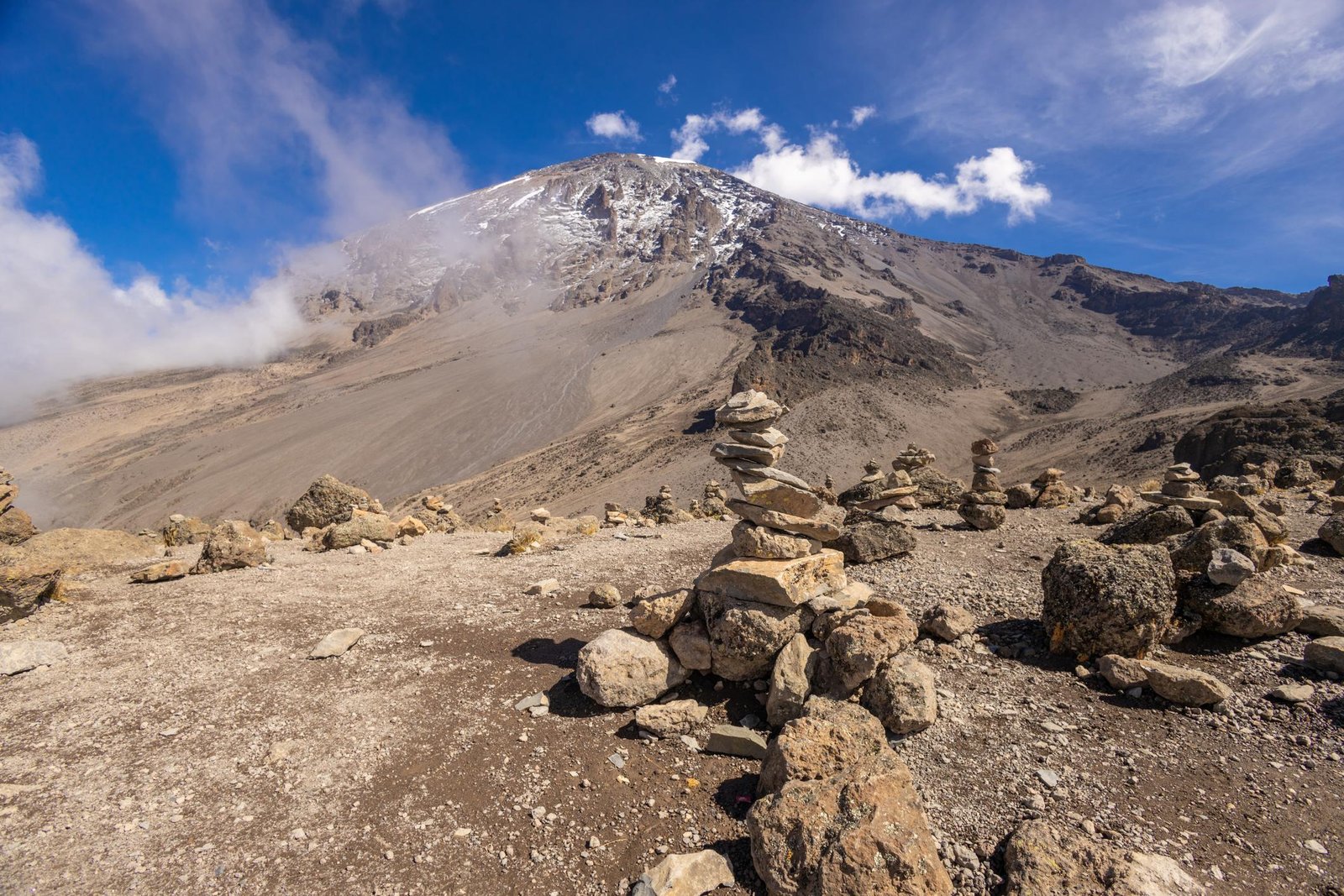
The trail merges with the Marangu route beneath Kibo’s immense shadow. Vegetation has long vanished; only rock, wind, and sky remain.
At Kibo Hut, the mood shifts inward. Equipment is checked in silence. Water bottles are wrapped against freezing. Sleep comes lightly, if at all.
Near midnight, boots crunch onto frozen ground.
Headlamps ignite.
The summit bid begins.
The ascent unfolds slowly in darkness, each step a quiet act of will.
Hours pass measured only by breath and heartbeat.
At Gilman’s Point, the horizon ignites with sunrise — a thin line of gold above a sleeping continent. Strength returns with the light.
The final traverse to Uhuru Peak is gentle, almost dreamlike.
Then suddenly, there is nowhere higher to go.
Africa spreads in every direction.
Glaciers glow in morning sun.
Wind carries the silence of the roof of a continent.
But the summit is only halfway.
A long, careful descent leads down through exhaustion and relief to Horombo Hut, where oxygen feels rich and sleep arrives instantly.
Forest returns slowly — first shrubs, then trees, then birdsong.
With each step downward, the summit feels both distant and unforgettable.
At Marangu Gate, certificates are handed out, photographs taken, laughter shared.
Yet something quieter remains:
The knowledge of having walked, step by step,
to the highest point in Africa.
Mount Kilimanjaro climbing is a carefully supported expedition that requires experienced guides, professional mountain crews, quality camping equipment, and strict safety protocols. The prices represent the total cost per person based on group size, allowing us to distribute the cost of guides, porters, park fees, transport, and expedition equipment across the team.
As the group size increases, the price per climber decreases because essential logistics such as mountain crew support, some safety equipment, and vehicle transfers are shared among participants.
| Pax | 1 | 2 | 3 | 4 | 5 | 6 | 7 | 8 | 9 | 10+ |
|---|---|---|---|---|---|---|---|---|---|---|
| 9-Day Northern Circuit | $3,123 | $2,573 | $2,409 | $2,328 | $2,323 | $2,283 | $2,254 | $2,233 | $2,217 | $2,202 |
(No hidden authority costs later)
Tips are customary and expected on Kilimanjaro and go directly to the crew.
Recommended total tip guideline (per group per day):
(Exact tipping chart provided after booking confirmed)
Climbing Kilimanjaro is a high-altitude expedition, not a simple hike. Every ascent is supported by experienced mountain crews, careful acclimatization pacing, and continuous health monitoring designed to protect both safety and summit success.
Certified local guides lead every climb, combining technical mountain knowledge with years of high-altitude experience on Kilimanjaro’s changing terrain and weather.
Oxygen saturation, heart rate, and overall condition are checked throughout the trek to identify altitude stress early and respond calmly and safely.
Crews carry emergency oxygen, first-aid equipment, and maintain clear evacuation procedures to ensure rapid response if conditions require descent.
Fair porter treatment, proper equipment, and responsible mountain practices protect both the team and the environment throughout the expedition.